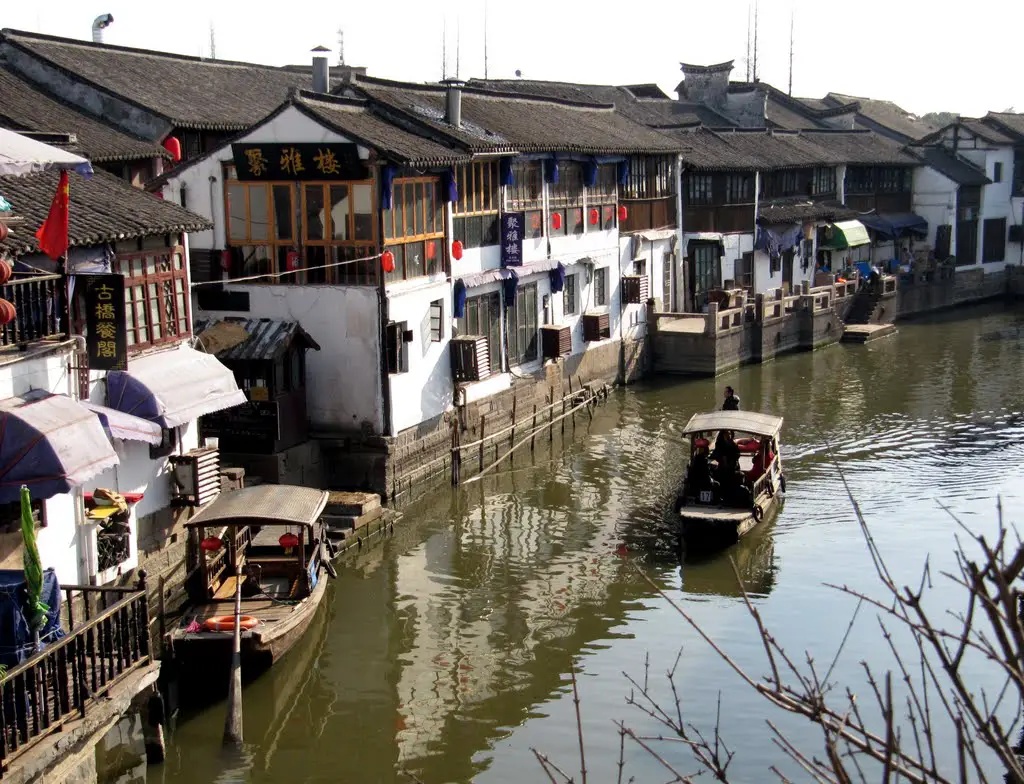
Zhujiajiao Water Town (Venice of Shanghai)
Taxi & Street Navigation Help
师傅,请带我去青浦区【朱家角古镇】旅游景区主入口停车场,谢谢!
Opening Hours & Best Time
Open 24/7 (Sightseeing boat rides & historic halls: 08:30 - 16:30)
💡 Pro Tip: Take Metro Line 17 straight to Zhujiajiao Station (1 hour from city center). Hire a hand-paddled gondola boat for ¥200 (holds 6 people) to cruise under Fangsheng Bridge. Avoid weekends if you want peaceful photography.
Accessibility & Luggage Lockers
Accessibility: ⚠️ Step thresholds, limited access
Many historic high-arch stone bridges with dozens of steep steps make wheelchair travel impractical across the waterways.
🧳 Luggage Storage: Luggage check service at Zhujiajiao Visitor Center (Gate 1).
Nearby Iconic Landmarks & Walking Connections
Easily combine your itinerary with these neighboring architectural landmarks and cultural points of interest:
About Zhujiajiao Water Town (Venice of Shanghai)
1. 1,700 Years of Waterways: The Venice of the Orient
Nestled in the western waterlands of Qingpu District, Zhujiajiao (朱家角) traces its roots back over 1,700 years to ancient Neolithic settlements. Benefiting from the natural network of Lake Dianshan and crisscrossing canals, it flourished during the Song and Yuan Dynasties into a prosperous regional trading hub for grain, rice, and salt.
During the Ming and Qing Dynasties, over a thousand merchant boats anchored along its waterways daily. Today, it remains the most intact, living ancient water town within Shanghai’s municipal borders, celebrated for its 36 arched stone bridges, waterside tea verandas, and preserved wooden residences built on granite piles directly into the riverbed.
2. Iconic Legends of the Canals
🌉 Fangsheng Bridge (Setting-Free-Animals Bridge)
- The Story: Constructed in 1571 during the Ming Dynasty by Buddhist Monk Xingchao, this is the largest and longest five-arch stone bridge in the entire Shanghai region. Its central arch spans an impressive 12 meters.
- The Buddhist Lore of “Fangsheng”: The name Fangsheng (放生) literally translates to “Setting Animals Free”. Monk Xingchao established a sacred covenant with local villagers: all fish, turtles, and aquatic life released beneath the bridge were protected, and commercial fishing within 500 meters of the bridge was strictly forbidden under divine curse. Today, elderly local women still sell small captive goldfish and river turtles at the foot of the bridge for visitors to release into the waters for good karma.
📮 The Great Qing Post Office (Da Qing Youju)
- The Story: Established in 1896 during the reign of Emperor Guangxu, this is the only surviving Qing Dynasty imperial post office in eastern China.
- The Imperial Courier Network: Before railways, urgent imperial decrees and commercial mail were transported through the Yangtze Delta by rapid wooden post boats (Wupeng Chuan) manned by oarsmen who paddled continuously day and night, changing horses and rowers at designated water relay stations.
- What to Experience: Step into the brick post office to inspect original Qing Dynasty dragon stamps, ancient postal scales, and bronze courier post-horns.
3. Cultural Sights & Street Food Traditions
- Kezhi Garden (课植园): A lavish 1912 private estate whose name means “Learn and Plant Garden” (combining study and agriculture). It features an eclectic architectural blend of traditional Chinese rockeries alongside European Art Nouveau stained glass and Romanesque arcades.
- North Street (Bei Da Jie): Known as the “Mile-Long Street”, this is the narrowest, most bustling street in town. Wooden shopfronts jut out over the stone paving, where matriarchs simmer fragrant Apo Zong (阿婆粽)—sticky glutinous rice dumplings stuffed with savory pork belly and salted duck egg yolks wrapped in dried bamboo leaves.