Yu Garden (Yuyuan Garden)
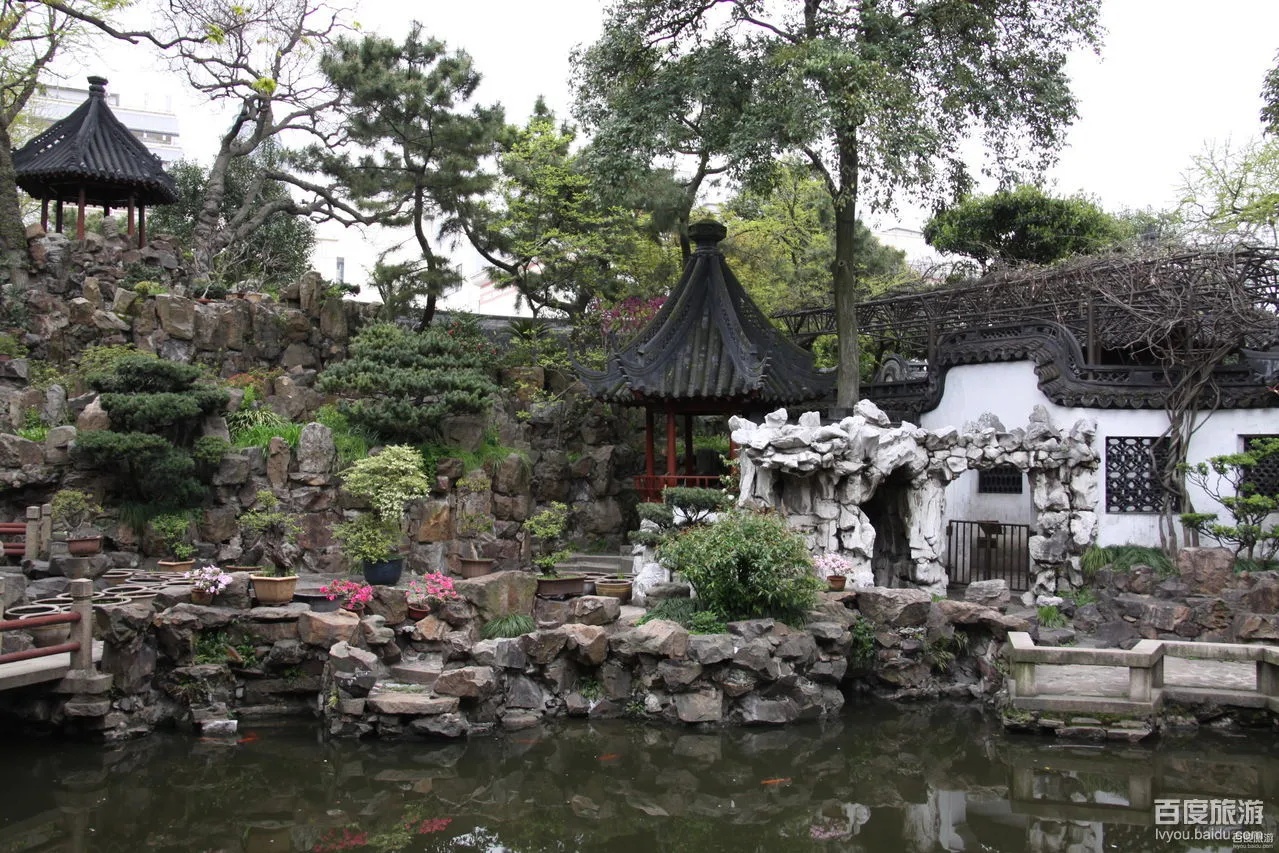
Beware of aggressive souvenir hawkers and fake private tea ceremony invitations in the adjacent outside Old Town bazaar.
Taxi & Street Navigation Help
师傅,请带我去黄浦区【豫园老街】(安仁街218号),在方便下客的福佑路附近停靠,谢谢!
Opening Hours & Best Time
09:00 - 16:30 (Ticket entry closes at 16:00; Closed Mondays)
💡 Pro Tip: The inner classical garden requires paid admission, but the surrounding Nine-Turn Bridge (Jiuqu Bridge) and ancient Ming/Qing style bazaar streets are completely free to wander.
Accessibility & Luggage Lockers
Accessibility: ⚠️ Step thresholds, limited access
Difficult for wheelchairs and baby strollers due to high stone thresholds, traditional narrow bridges, and cobblestone pathways within the inner classical garden.
🧳 Luggage Storage: Electronic lockers available near Yuyuan Metro Station Exit 1.
Nearby Iconic Landmarks & Walking Connections
Easily combine your itinerary with these neighboring architectural landmarks and cultural points of interest:
Skip On-Site Ticket Lines
Reserve verified instant mobile e-tickets using global Visa/Mastercard.
About Yu Garden (Yuyuan Garden)
1. The Tale of Filial Devotion: A 20-Year Labor of Love
Behind the tranquil rockeries and emerald koi ponds of Yu Garden lies an extraordinary 16th-century story of Chinese filial piety.
Construction began in 1559 during the Ming Dynasty by Pan Yunduan, a high-ranking imperial treasury commissioner. Pan’s aging father, Pan En, had served as the Minister of Justice in the imperial court and was growing weak with advanced age, longing for a peaceful retirement. To comfort his father in his golden years, Pan Yunduan commissioned the finest artisans of the Yangtze River delta to construct a sanctuary simulating the sacred peaks and mystical rivers of mythical China.
The character “Yu” (豫) in ancient Chinese denotes “Pleasing, Peaceful, and Reassuring”—hence the name translates directly to “The Garden of Peaceful Contentment”. Tragically, ancient construction spanned nearly twenty grueling years; by the time the pavilions and waterworks were fully completed, his father had already grown too frail to fully enjoy its grandeur, but Pan Yunduan’s dedication cemented the garden’s place in Chinese cultural lore.
2. Feng Shui Mysteries & Hidden Imperial Secrets
🐉 The Dragon Walls: Outsmarting the Emperor’s Executioner
As you meander through the garden’s courtyards, look up at the undulating white plaster perimeter walls capped with black roof tiles. Coiling gracefully along the tops of these walls are five massive sculptured clay dragons, their dramatic serpentine bodies mimicking the contours of sacred rivers.
- The Imperial Secret: In imperial China, the dragon was the exclusive supreme emblem of the Emperor. Imperial sumptuary law dictated that unauthorized depiction of a five-clawed imperial dragon was punishable as high treason—by the horrific sentence of Nine Familial Exterminations (death to one’s entire lineage).
- The Clever Evasion: Pan Yunduan and his master artisans deliberately carved the dragons with only three or four claws and subtle toad-like jaws, claiming to imperial inspectors that these mythical beasts were merely Mang (water serpents or horned lizards), cleverly bypassing the executioner’s sword while retaining magnificent royal aesthetics.
🪷 The Nine-Turn Bridge (Jiuqu Bridge) & Demon Geomancy
Directly outside the garden’s gate, crossing a vibrant lotus pond filled with hundreds of crimson koi fish, sits the world-famous zigzag stone bridge leading to the historic Huxinting Teahouse (Shanghai’s oldest teahouse, where Queen Elizabeth II enjoyed tea during her 1986 royal tour).
- Why Nine Right-Angle Turns?
- Chinese Demon Lore: Traditional Chinese geomancy holds that evil spirits and ghosts can only travel in rigid, straight lines. They cannot bend or pivot around corners. By walking across a path with nine right-angled zigzags, travelers shake off negative energy and leave malevolent spirits trapped at the shoreline.
- Micro-Spatial Aesthetics: In classical Chinese landscape philosophy, walking a straight bridge reveals the entire vista in one monotonous glance. By forcing the walker to pivot nine distinct times, the viewer is treated to nine completely different framed perspectives of surrounding pavilions and willow reflections.
3. The Grand Rockery (Da Jiashan): Ancient Engineering Prowess
Rising 14 meters in the garden’s northern sector is the legendary Grand Rockery, constructed by master sculptor Zhang Nanyang. Composed of over 2,000 tons of golden-hued Wukang limestone boulders bonded together using a secret ancient mortar mixture of sticky glutinous rice pulp and slaked lime, this artificial mountain has survived wars, torrential typhoons, and modern earthquakes for more than 400 years without shifting a single stone.