Jing'an Temple (Temple of Peace and Tranquility)
Taxi & Street Navigation Help
师傅,请带我去静安区南京西路【静安寺】正门(南京西路1686号),谢谢!
Opening Hours & Best Time
07:30 - 17:00 (Evening exterior illumination until ~22:00)
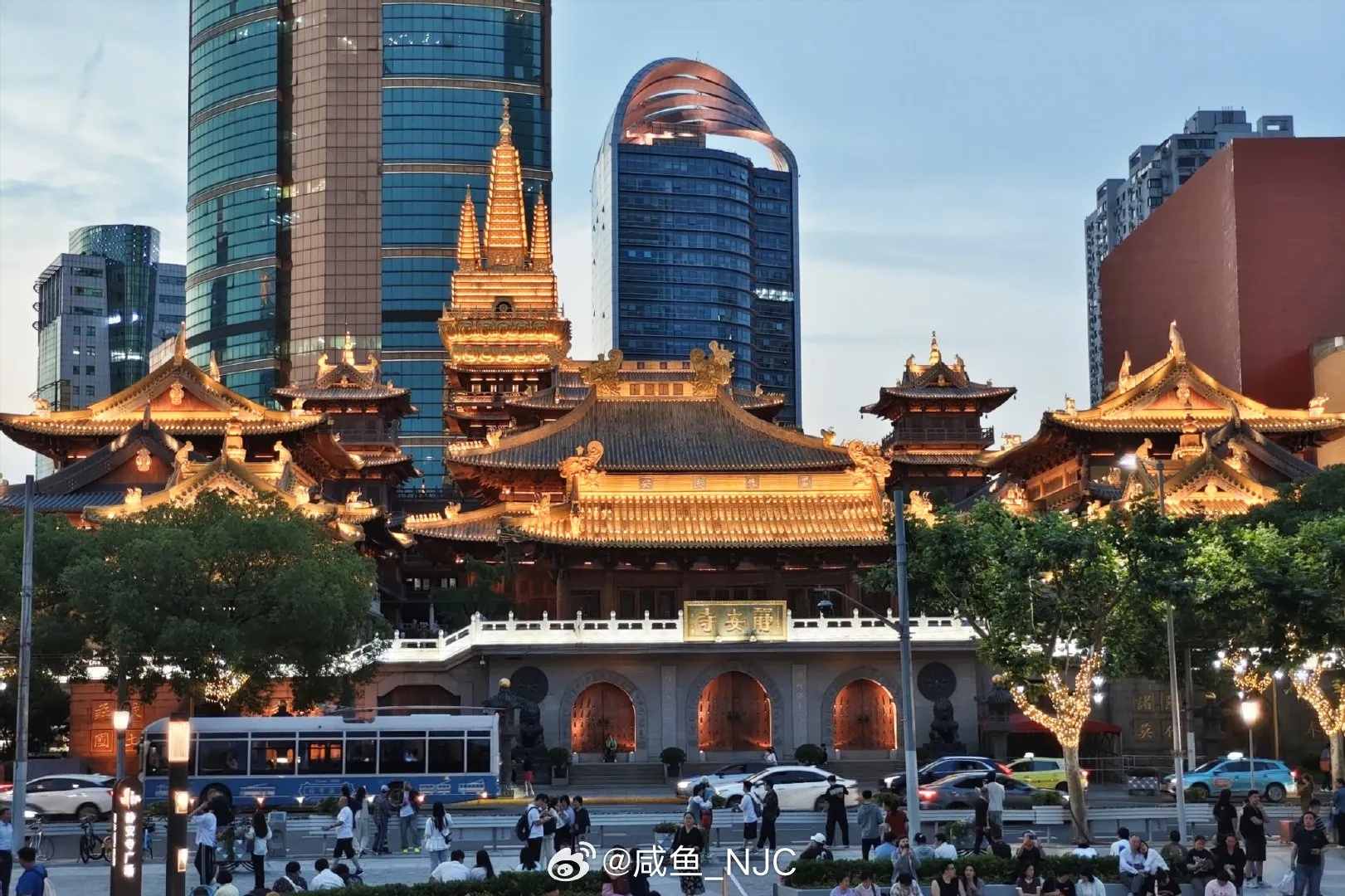
💡 Pro Tip: Toss coins into the towering bronze pagoda incense urn in the central courtyard for good luck. The contrast between ancient golden Buddhist roof eaves and surrounding futuristic glass skyscrapers makes this Shanghai's most surreal architectural sight at dusk.
Accessibility & Luggage Lockers
Accessibility: ♿ Wheelchair & Stroller Friendly
Elevator access available inside the rear multi-story halls; the grand courtyard is flat and spacious.
🧳 Luggage Storage: Electronic lockers available inside Jing'an Temple Metro Station (Line 2/7/14 exit corridor).
Nearby Iconic Landmarks & Walking Connections
Easily combine your itinerary with these neighboring architectural landmarks and cultural points of interest:
About Jing'an Temple (Temple of Peace and Tranquility)
1. 1,800 Years of History: Tracing Back to the Three Kingdoms (247 AD)
While modern travelers marvel at the glittering golden eaves reflecting off neighboring Prada, Gucci, and Apple glass flagships along West Nanjing Road, few realize that Jing’an Temple predates the city of Shanghai itself by nearly a thousand years.
The temple was originally founded in 247 AD during the legendary Three Kingdoms period by Sun Quan, Emperor of the Kingdom of Wu. Initially located on the northern banks of Wusong Creek (Suzhou Creek), it was relocated to its current urban site during the Song Dynasty (1216 AD) due to rising water floods.
During the Song Dynasty, the bubbling natural spring well situated directly in front of the temple grounds was christened by ancient calligraphers as “The Sixth Spring Under Heaven” (天下第六泉). Today, this ancient geothermal spring is commemorated by an ornate sculpted limestone pavilion at the temple plaza.
2. Surviving Upheavals: From Plastic Factory Back to Golden Sanctuary
During the cultural turmoil of the mid-20th century, the temple was secularized and temporarily converted into a plastics factory, with its ancient copper bells and statues removed.
Following a catastrophic fire in 1972, the Shanghai municipal government and global Buddhist associations undertook a colossal, decade-long reconstruction project beginning in 1983:
- Genuine Burmese Teakwood: The soaring Mahavira Hall was reconstructed using hundreds of massive, imported centuries-old teak trunks without using steel nails.
- Silver & Jade Treasures: The central shrine houses a breathtaking 15-ton pure silver statue of Shakyamuni Buddha and China’s largest seated Burmese white jade Buddha (3.8 meters tall).
- Pure Gold Leaf Roofs: The multi-tiered roofs and ornamental stupa pagoda are clad in thousands of delicate sheets of pure 24-karat gold leaf, casting an ethereal warm amber glow over the bustling financial district at night.
3. Cultural Etiquette: How to Visit Respectfully
Buddhist monasteries welcome travelers of all faiths, but mindful travelers should observe these sacred etiquette guidelines:
🚫 The Sacred Threshold Rule (Never Step on the Door Sill)
- What to do: When entering through any traditional hall doorway, step OVER the raised wooden threshold (door sill). Do not plant your shoe on top of it.
- The Cultural Meaning: In Chinese architectural symbolism, the wooden threshold represents the “shoulders of the Buddha” or the “spine of the ancestors”. Stepping on it is considered profoundly disrespectful and bad luck. (Tradition says gentlemen step across with their left foot first, and ladies with their right foot first).
🪙 The Coin-Tossing Courtyard Ritual
- Stand in the vast central stone courtyard. You will see worshippers attempting to toss small coins into the small circular openings of the giant multi-tiered bronze pagoda incense burner. If your coin lands inside, folklore holds that your prayers for health and prosperity will be answered.
📸 Respectful Photography
- Photography of the external golden architecture and courtyards is completely permitted. However, avoid taking close-up flash photos of monks during active silent meditation chantings or directly into the eyes of Buddha statues during private prayers.